When people come to see me, they are often frustrated.
They have been experiencing symptoms for months, sometimes years. They may have seen several practitioners, had standard medical tests, and still been told that everything looks “normal.” Yet they know in their body that something is not quite right.
This is where functional testing can be incredibly valuable.
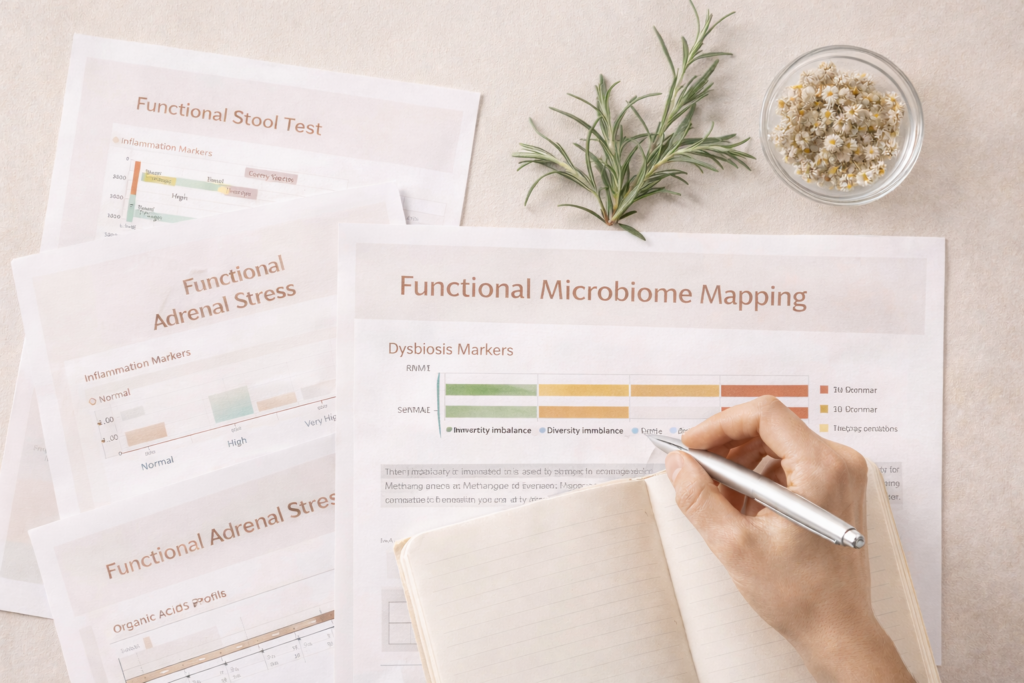
Functional testing allows us to look deeper into what is happening inside the body, helping us uncover the underlying imbalances that may be contributing to your symptoms.
Rather than simply diagnosing disease, functional testing helps us understand how the body is functioning and where support may be needed.
Looking Beyond Symptoms
Many health conditions begin developing long before they show up as a diagnosable illness.
During this time, the body often sends subtle signals that something is out of balance. These signals might appear as:
- digestive discomfort
- fatigue
- brain fog
- skin issues
- hormone imbalances
- food sensitivities
- mood changes
While these symptoms can feel frustrating, they are often valuable clues that help guide us towards the underlying cause.
Functional testing helps us investigate these clues more thoroughly so we can develop a treatment plan that supports the body in restoring balance.
What Functional Testing Can Reveal
Functional testing looks at many different aspects of health, depending on your symptoms and health history.
Some of the most common areas we investigate include:
Gut health – assessing the microbiome, digestive function, inflammation and potential pathogens.
Nutritional status – identifying nutrient deficiencies or imbalances that may be affecting energy, mood or immune health.
Hormonal balance – exploring patterns in hormones that may be contributing to fatigue, mood changes or reproductive issues.
Inflammation and immune function – helping us understand whether the body may be under stress or responding to hidden triggers.
By understanding these deeper patterns, we can design a treatment approach that works with your body rather than simply trying to suppress symptoms.
Why Testing Can Be So Helpful
While symptoms provide important information, they don’t always tell us the full story.
Functional testing allows us to gather objective information about what is happening internally. This can help confirm what we may already suspect based on your symptoms and health history, or it may reveal factors that would otherwise be difficult to identify.
This information allows us to create a more personalised and targeted approach to your health.
Instead of guessing, we can make informed decisions about the most appropriate diet, herbs, supplements and lifestyle changes that may support your healing process.
Testing Is Only One Part of the Process
Although functional testing can provide valuable insight, it is only one piece of the puzzle.
True healing involves understanding the whole person, which includes your symptoms, your lifestyle, your emotional wellbeing and the patterns that may be influencing your health.
In my practice, I combine the information from functional testing with naturopathic principles and a holistic understanding of the mind–body connection.
This allows us to develop a treatment plan that supports not only your physical health, but also the deeper layers of healing that often need attention.
A Personalised Path to Healing
Every person’s health journey is unique.
Functional testing helps us gather the information needed to better understand what your body may be asking for, allowing us to create a treatment plan that is tailored specifically to you.
By addressing the root causes of imbalance and supporting the body’s natural healing processes, we can begin to restore the balance that allows true health to emerge.