
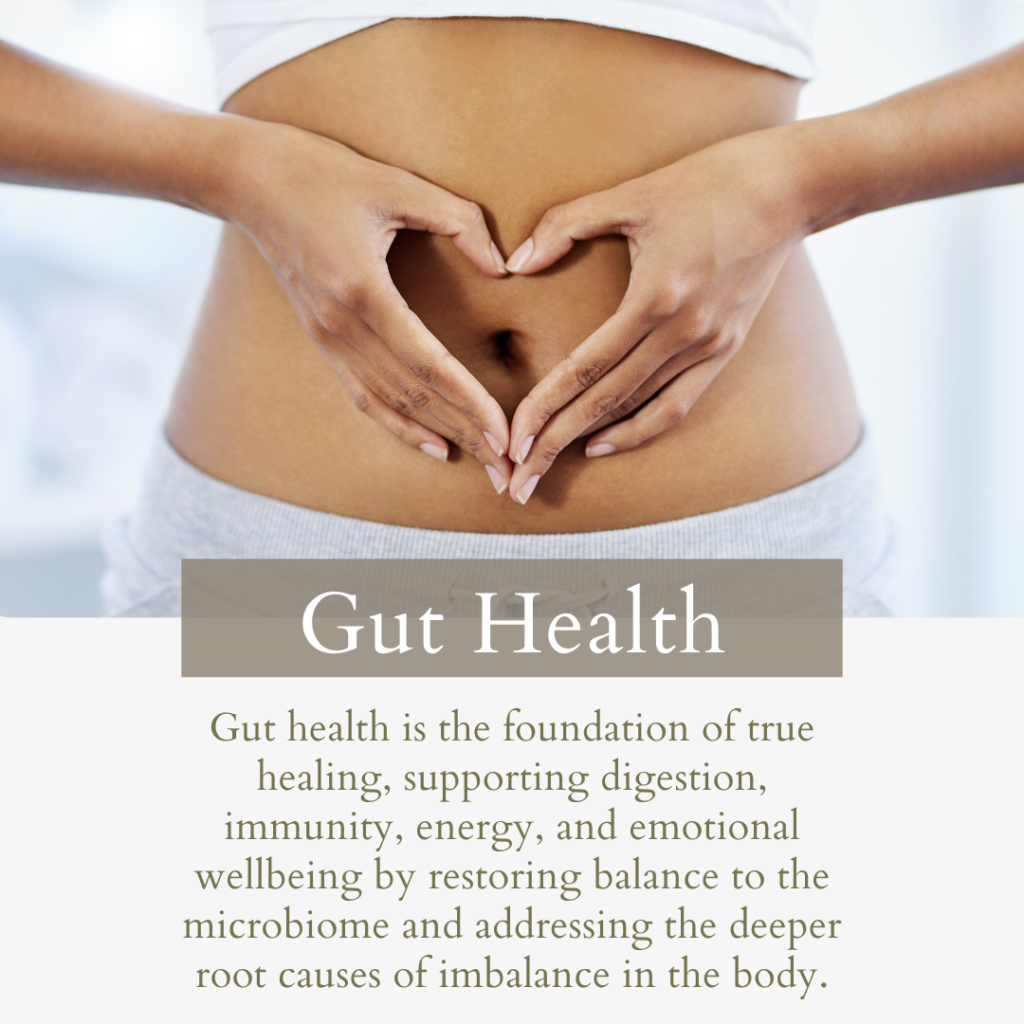
When people come to see me, they are often surprised to learn just how much of their health begins in the gut.
Digestive health is not just about what happens in your stomach after you eat. Your gut plays a role in almost every system in your body — from your immune system and hormones, to your energy levels, mental clarity, skin health, and emotional wellbeing.
When the gut is not functioning well, the body cannot properly absorb nutrients, eliminate toxins, or maintain balance in the microbiome. Over time this can create inflammation, fatigue, hormonal disruption, and a wide range of chronic symptoms.
In my clinical experience, supporting the gut is often the starting point for restoring health.
What Gut Health Really Means
Gut health refers to the overall function and balance of the digestive system and the trillions of microorganisms that live within it.
Your digestive system is responsible for far more than simply breaking down food. It is responsible for:
• Digesting and absorbing nutrients
• Supporting immune function
• Regulating inflammation
• Producing neurotransmitters such as serotonin
• Protecting the body from pathogens and toxins
When the gut microbiome becomes imbalanced — a condition known as dysbiosis — it can allow harmful bacteria, yeast, or parasites to overgrow while beneficial bacteria decline.
This imbalance can lead to symptoms such as:
• Bloating and digestive discomfort
• Food intolerances
• Fatigue
• Brain fog
• Skin conditions
• Hormonal imbalances
• Mood changes
• Frequent infections
Many people live with these symptoms for years without realising the gut may be at the centre of the issue.
Why Gut Problems Are So Common Today
Modern life places a significant burden on our digestive system.
Factors that commonly contribute to poor gut health include:
• Antibiotic use
• Highly processed foods
• Chronic stress
• Environmental toxins
• Poor sleep
• Alcohol and sugar consumption
• Long-term medication use
Over time these influences can disrupt the delicate ecosystem within the gut, allowing opportunistic organisms such as candida, parasites, and pathogenic bacteria to thrive.
This is why many people feel like their health has slowly declined over time without an obvious cause.
My Approach to Healing the Gut
In my practice, gut healing is not about simply taking a probiotic or following a temporary diet.
True healing requires addressing the underlying causes of imbalance and creating an environment where the gut can properly repair itself.
When working with clients, I take a comprehensive approach that may include:
Identifying Hidden Infections
Many gut issues are driven by underlying microbial imbalances such as:
• Candida overgrowth
• Parasites
• Bacterial dysbiosis
• Biofilms that protect harmful organisms
Using clinical assessment and functional testing where appropriate, we can identify what may be contributing to your symptoms.
Removing Irritants and Pathogens
Once we understand what is disrupting the gut, we work on gently removing these stressors.
This may involve:
• Targeted herbal antimicrobials
• Dietary adjustments
• Supporting digestion with enzymes and stomach acid
• Breaking down microbial biofilms
This phase helps clear the environment so the gut can begin healing.
Repairing the Gut Lining
The gut lining is incredibly important for preventing inflammation and maintaining proper immune function.
When this barrier becomes compromised, a condition often referred to as leaky gut, toxins and partially digested food particles can enter the bloodstream and trigger systemic inflammation.
Supporting repair may involve nutrients and herbal medicines that nourish the gut lining and restore integrity to the digestive tract.
Rebuilding a Healthy Microbiome
Once the gut environment has been cleared and repaired, we focus on rebuilding beneficial bacteria.
This stage helps restore resilience to the digestive system and prevents harmful organisms from returning.
Diet, lifestyle, and targeted supplementation can all play a role in this stage of healing.
The Gut and the Mind-Body Connection
Something I have observed over many years in practice is that gut health is not purely physical.
Emotional stress, unresolved trauma, and nervous system dysregulation can all impact the digestive system.
The gut and brain communicate constantly through the gut–brain axis, which means emotional stress can directly affect digestion, inflammation, and microbial balance.
For this reason, I often incorporate deeper mind-body work alongside naturopathic treatment to support true healing.
When we address both the physical and emotional layers of health, the body is able to recover more fully.
Healing the Gut Takes Time
One of the most important things to understand about gut health is that healing does not happen overnight.
The digestive system has often been under strain for many years before symptoms become severe enough to seek help.
Restoring balance requires patience, consistency, and the right support.
The good news is that the gut has an incredible ability to repair itself when the right conditions are created.
Supporting Your Gut Health
IWhen people come to see me, they are often surprised to learn just how much of their health begins in the gut.
Digestive health is not just about what happens in your stomach after you eat. Your gut plays a role in almost every system in your body — from your immune system and hormones, to your energy levels, mental clarity, skin health, and emotional wellbeing.
When the gut is not functioning well, the body cannot properly absorb nutrients, eliminate toxins, or maintain balance in the microbiome. Over time this can create inflammation, fatigue, hormonal disruption, and a wide range of chronic symptoms.
In my clinical experience, supporting the gut is often the starting point for restoring health.